Introduction
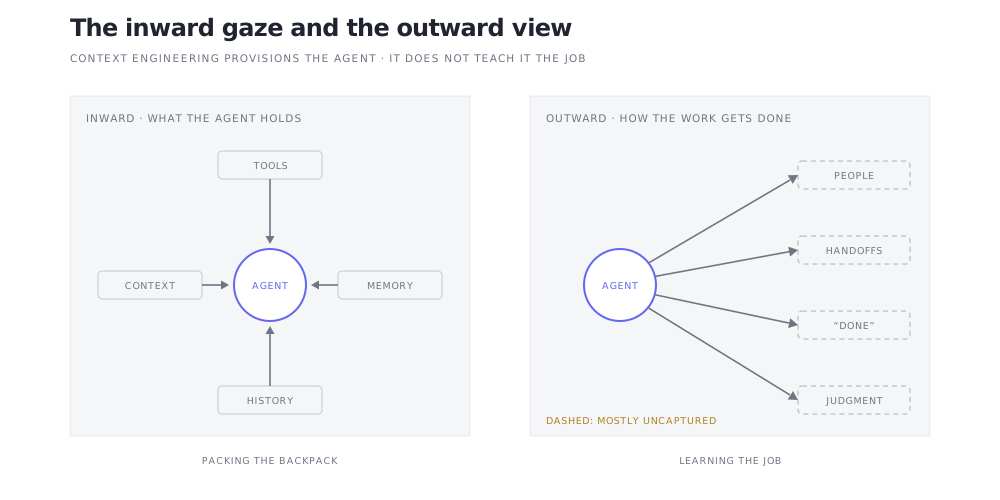
I spent May and June on sabbatical—travelling, reading, and deliberately not shipping anything. The point of stepping back is to see the shape of a thing you're too close to when you're inside it. And the shape I kept seeing is this: nearly everything we're building for agents right now points the agent inward. At itself. At its own tools, its own context, its own memory. Very little of it points outward—at the people and the organizations the agent is supposed to be working for.
That sounds abstract, so let me make it concrete with the discipline that has absorbed the most energy this year: context engineering. It's a genuinely useful idea. It's also, when you look at it squarely, entirely inward-facing—and I think that tells us something about where the field's attention is, and where it isn't.
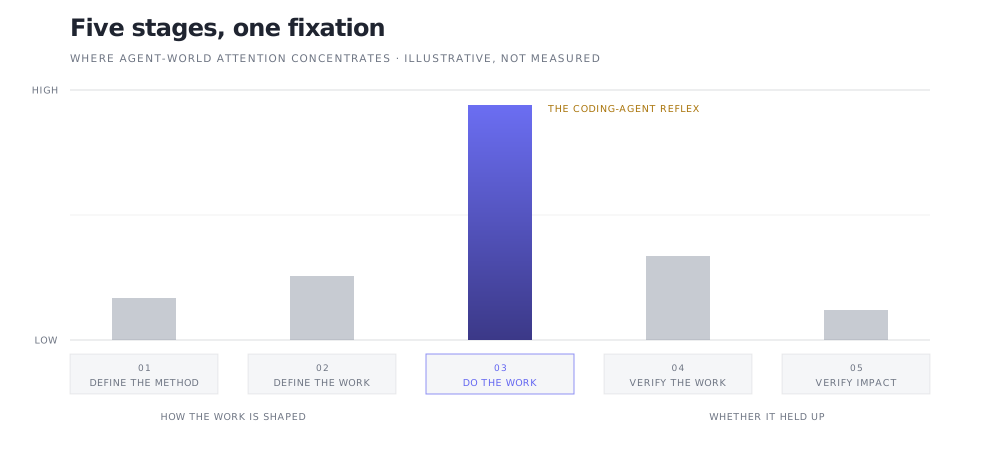
The argument, compressed: context engineering—for all its value—is the clearest symptom of the inward gaze; "do the work" is one stage out of five, and the coding-agent reflex fixates on it; and every way we already capture how work is done—SOPs, BPMN, process mining—gets bent toward executing a step instead of understanding the job.