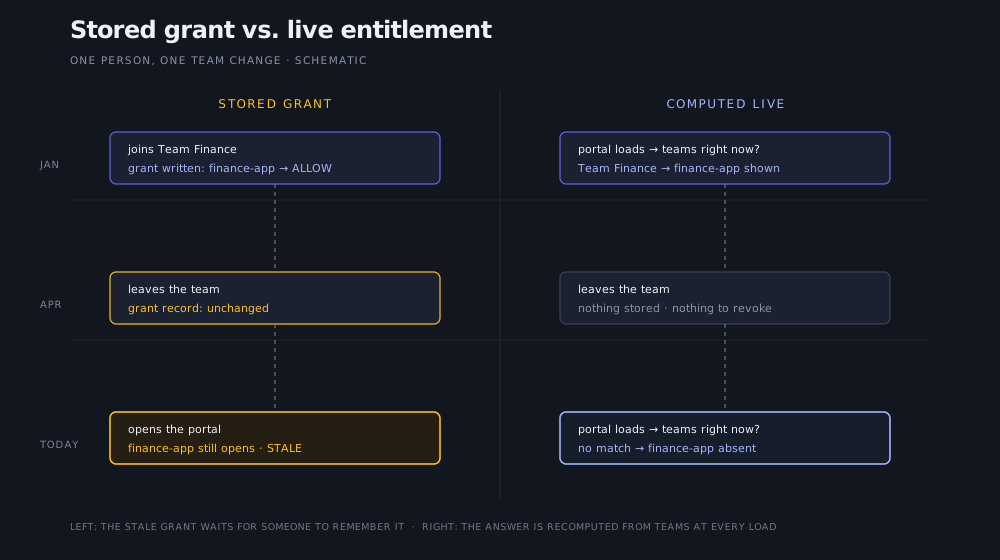
The stored grant is where access goes wrong
You've already signed in this morning. Your laptop knows who you are; your company knows who you are. Then you click into the finance app and it asks again: a different password, or one you reset last month and can't remember, or a login screen you've never seen because someone provisioned the account for you back in the spring and you're only opening it now. So you file a ticket. Someone checks a spreadsheet. Twenty minutes evaporate before any real work happens. Multiply that by every internal tool and every person, and you have a permanent, invisible tax on a scaling company.
Underneath it sit two familiar failure modes. The first is password sprawl: a separate credential for each app, each one a support ticket and a soft security hole waiting to happen. The second is quieter: access drift. Access gets granted once, written down somewhere, and then reality moves. People change teams, projects end, a contractor's engagement lapses. The written-down grant stays where it was, so the list of who-can-open-what slowly stops matching the list of who-should. Nobody decides that; the list drifts on its own.
Auth is our design-sprint answer to both. To be plain about what it is: an interactive prototype with placeholder demo data, screens you can open and click through, with no shipped product behind them. The position the screens argue is the point of this post: don't store the access answer, compute it. And when the actor is an agent rather than a person, give it an agency, a defined and auditable set of actions, in place of a borrowed session or a service key. First the portal a person sees, then the live computation underneath it, then what an agent gets.