Systems built one shot at a time degrade
Most new code is now written by agents, and a growing share of it is reviewed by agents too. The pattern is familiar: an engineer writes an architecture document or a spec, hands it over, and the agent builds it. The first pass usually lands; you ask for a service and get a working service, often the same afternoon. The trouble shows up months later, in a system that has absorbed hundreds of those passes. A change that should take a day takes a week, because the code is organized around decisions no one remembers making. The agent made them, for reasons that were sound inside a context window that is long gone. Then someone in a planning meeting asks a plain question: does checkout do what we said it does? And the room goes quiet.
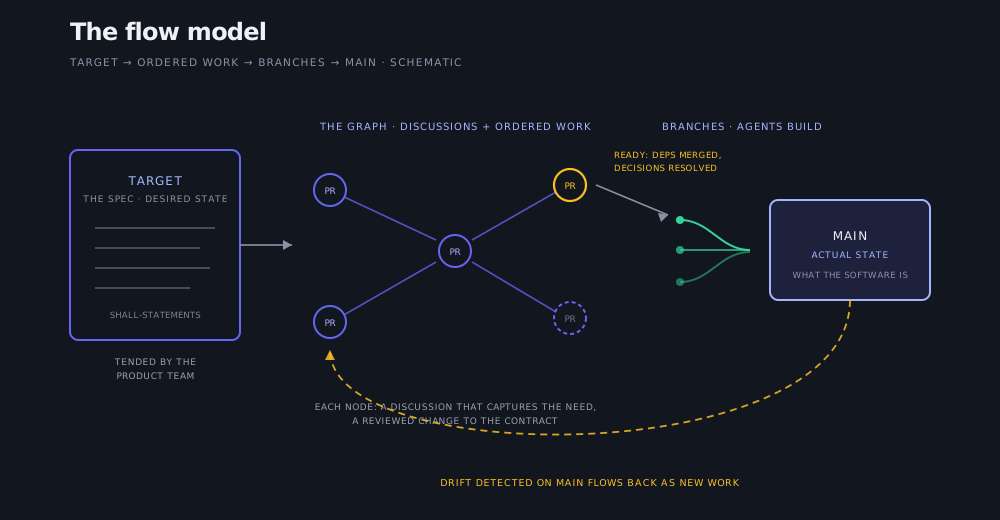
Drift is our answer to that failure, and it rests on one sentence, printed under the board title: the spec is the desired state; the code is the actual state. The vocabulary comes from control systems. You declare the state you want, you measure the state you have, and the difference between them is the work. In the demo, the Code layer’s header reads 92% in sync, 2 gaps, 2 building (every number on these screens is demo data; what matters is that the distance between promise and behavior appears as a measured figure at all). When the spec promises something the code doesn’t do, the gap surfaces on its own, before anyone has to notice it, write a ticket, and groom it forever after.
To be plain about what Drift is: an interactive prototype from one of our design sprints, exploring a problem we kept hearing about. No part of it is running for customers. The tools we plan with today assume the scarce thing is coding time; once agents write the code, the scarce thing is a durable record of what the software is supposed to be, and why. First we show the three layers the board holds, then the graph that sits between the target and main, then how the loop closes from main back into planning.